UNWORTHY MEMES
ENDING THE COSMIC WAR ONE STORY AT A TIME

It was 2023. A kinder, simpler time. Back when we talked to our neighbours and Twitter was only slightly a shitfest. I was so much younger then. Three years younger in fact, a mere summer child. Do you remember? One of the big issues of the day was immigration. People on the far right were decrying the collapse of western civilization. Immigrants were to blame. The gap between actual humanity and the very very wealthy was growing. Wealth was being accumulated in fewer hands. It was becoming harder to get across all the pressing issues of the day.
As I said, a very different time.
Kia Ora Tatou and Welcome to Ending the Cosmic War, with Karen Effie.
I was having a go at Stories, by which I mean those deep Stories that drive our thinking and sit backgrounded, so that we don’t even know they are there until they come forward in the telling. The Cosmic War is such a Story. It is like capitalism, it takes up the horizon. Telling Stories foregrounds them, for better and for worse. Today, with Christian Zionism in the ascendant, the Story of the Cosmic War is being told more openly and in more powerful places.
We have a responsibility to our Stories, and this is why I want to stop telling the old one about the Cosmic War, because I think it does more harm than good, and we can tell better Stories. The old characters of the Cosmic War, such as the Saviour Hero and the Small Band of Virtuous Rebels, are well and truly corrupted now. We can have better characters in our Stories. Our best literature is full of better characters. So are our communities.
Thinking about Stories and how they work, back in 2023, I wrote this piece about a very topical matter. You may remember it if you are old like me. I think the ideas in the piece are still useful. Here it is:
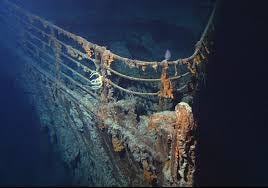
As I write, five men are most likely dying in a tiny submersible deep in the cold sea off Newfoundland. They are ultra rich tourists who tried to reach the wreck of the Titanic, until it all went south. The legacy media update us several times a day across all the usual platforms. It is the lead story on the TV news.
Meanwhile on social media, some unworthy memes appear. I admit to having shared some. Billionaires are inherently risible. Consigning them to the bottom of the ocean could be seen as a merciful fate, considering the damage they cause. I liked the one of Elon Musk being ushered into the deep by a kind caregiver, while mouthing crap about the word cis being a slur.
Next up, come the whatabout or comparison memes. Recently, a boat sank off the coast of Greece with 500 desperate migrants and refugees on board. We did not get hour by hour coverage of their plights on legacy media. The question is, why is there such coverage for 5 billionaires and not for 500 impoverished migrants? Is it racism? Is it because popular political thought nowadays trends right? Don’t we care? Do we care more about the billionaires?
In other words, social media is doing what it does, which is a kind of reflexive non-reflexiveness I have observed ever since people got their dicks out for Harambe in 2016. Harambe was a lowland gorilla in a zoo. A small boy fell into his enclosure and keepers shot Harambe. The internet cheerfully turned on Harambe, then the zoo, and then the boy’s parents. Mock campaigns such as Justice for Harambe morphed into Dicks Out For Harambe, as we saw the gleeful nihilism of chan culture in the light of mainstream social media. Such industrial grade irony is less common in the mainstream nowadays , but the to and fro whataboutism is still there, and you can almost count the hours until the next step emerges. We are sad for five trapped, dying people. Then we hate them and laugh at them because they are billionaires. Then we criticize the media themselves and point out the hypocrisy. We love hypocrisy. Then we castigate ourselves for being so mean. All in a matter of days.
There is more going on, and further answers to why five billionaires dying in a submersible get more bandwidth than 500 migrants in a boat.
Some of it is to do with how we tell stories. How we tell stories helps govern what stories we tell. There is a tyranny of numbers. It is easier to sympathize with five people than 500. At a certain point, the number becomes too big and people become faceless masses.
We also like stories with plots. The submersible story is a good plot. There is a back narrative, about how the submersible may not have been fit for purpose. We are introduced to the characters, plucky white men up for extreme adventure, wise experts no one listened to, greed, and cool techy bits. There is the extreme setting of the deep sea with all its mystery, and the Titanic itself. Then the submersible gets lost. Tension builds. It is hour by hour, oxygen is running out, equally plucky but flawed experts are doing vital and busy things to help. Whoah, so tense now. Minute by minute, there will either be a miraculous rescue or a real tragedy.
What a screenplay.
A little less cynical now, this case reminds me of the Thai soccer team stuck in the cave, or the Argentinian miners stuck in the mine. The plot arc is the same. They weren’t billionaires, but we felt for them and held onto hope for them as we watched the rescue efforts in real time. So it is not just about who they are that makes this beguiling, it is the telling of the tale, the shape and form of the story itself. We instantly recognize the shape of stories. My clever daughter liked me to tell her stories at bedtime. After some time of tales of princesses and derring-do I suggested a story from real life. I told her about how my mother went rabbit shooting, but she was so reluctant to actually harm a rabbit the best she could do was shoot the tail off one. My daughter looked at me and said ‘And…’ and she was right. This was not a story. It might be the beginning of one, if the rabbit turned to my mother and told her she would be cursed by rabbitkind until she found the seven golden carrots of the mystic field, and so on. But as it was, it was the merest anecdote.
We also like novelty. Unfortunately, migrant boat disasters are as quotidian as migrants. The migrant crisis is seen as an issue rather than a story, because it is a sign of our times. It goes on and on. Boat disasters feed into the issue, rather than being stories. If billionaires in tiny submersibles went missing five times a day we would stop being interested. Instead, our governments would debate the ongoing problem of rescuing billionaires and the resources they take up, and we would go to the polls to vote about the submersible crisis.
This novelty aspect is important. A good story, one that gets traction and captures us for a short while, has to be novel enough not to happen every day, but also within our common imaginations. If it were outside of our imaginations, we would not recognize it as a story. This is the problem with how we talk (or rather, don’t) about the climate catastrophe. Amitav Ghosh, in his wonderful essay The Great Derangement, talks about how unique events throw our behaviour out of whack. We have no precedent. There is no good advice to hand. We may have no language. We face weather events so extreme, hundred year storms happening several times a year, and these events are still reported singly, as if there is no pattern to them. It is as if they are still unique, and we still can only describe them as they happen, rather than predicting or formulating.
Old stories, by which I mean pre-Enlightenment stories, are a mess. There is no clear moral. There is often no clear end. Perfectly reasonable young men forget their starving families in order to tilt for kingdoms. Kind and hard-working daughters get themselves into total shit for no reason and then take unnecessarily long times to get out. It is hard to tell whether anyone learns their lessons. Plots rely heavily on deus ex machina, or the idiot ball. Middle Eastern stories, such as the Tales of Bidpai or the Arabian Nights, are stories nested within stories within stories, so layered you wonder whether they will ever get to the point.
Ah, the point.
They were oral stories, campfire stories, stories sung to royalty, and they were never told the same way twice, which is partly why they come to us in a kind of aggregated form perhaps, far from simpler roots. They are alive; they have agency. Their tellers may be mere conduits. Stories have personalities. They may need coaxing, or they may be bursting to come out. Listening to stories is a skill. Think of how we know we are about to listen to a story. The story starts in a stereotypical manner, such as ‘once upon a time’ or the many cultural variations of this. These few words line up our attitudes to the story. Listening requires prior understanding of the motifs that weave their way in and out. We know there will be seven of this, and three of that, and the youngest son and the golden ball and the talking hawk. Listening requires more than a suspension of disbelief; it requires a holding of images in the heart. If we do all this, a good story can be life changing.
I think something has gone wrong with our stories. We can’t manage complexity or contradiction and it is so hard to hold images in our hearts without judging them or extracting something from them. We think real things are metaphors and yet we also expect ideas to be literally, 100 percent proof, real. We are beset with fundamentalism. Our stories are all formed the same, and I suspect there are fewer of them.
It’s becoming important. We can’t talk about what is happening unless we can story it. Our stories are inadequate to the task of facing ourselves and our calamity. While this is all we are doing, our leaders will pour their resources into the wrong things, and we will stay glued to our screens.
Karen Effie
June 2023
Thank you for reading this, and ma te wa.
Further:
https://www.lego.com/en-nz/product/lego-titanic-10294 now, for just over $1100 you can build your own lego Titanic. As you do.